



















































Ikea is Making Vegetarian Meatballs as Part of its Major Push for Sustainability
Apr 30, 2014 19:34

Not only are Ikea's meatballs a Swedish icon, everyone who isn't a vegetarian has tried the dish at least once when stepping into Ikea's restaurant. However, because the traditional recipe requires beef and pork (in non-Muslim countries) - both of which are major contributors to climate change - the company is working on vegetarian and chicken options to help lower its carbon footprint.
Technically, the food served and sold in Ikea stores is responsible for 600,000 tons of carbon dioxide emissions every year. That's only about 2% of the company's entire footprint. So the company has decided to aggressively improve everything it makes, from Åfjärden to Flärdfull.


“We didn’t want to have 5% of our range “green” and ignore the rest,” says Steve Howard, the company’s chief sustainability officer. “If we think of the challenge--society is using 1 ½ planets’ worth of resources every year, and on track for more--business as usual isn’t an option. Sustainability has to be in every product in every customer’s home. It shouldn’t be a luxury for the few.”
Ikea now measures every product against an internal scorecard, which weighs factors like the materials used, energy use in production and transportation, and how easy the product is to recycle when someone wants to throw it away.
“When you decide to get 100% behind something, it actually makes it easier because you put all of the energy in the business behind that solution,” Howard says. “So we scaled. We got the high-quality, super long-life LEDs at a great price much earlier than we would have done if we’d not had the transformational target.”
“The benefits can come in surprising ways,” Howard says. “Our most popular sofa, the Ektorp, we just redesigned so that could flatpack down and you could ship it. You could triple the number of sofas you could ship. You’ve effectively reduced the transport emissions by two-thirds. The customer is part of the deal--we pass on the savings to the customers so it’s a few dollars cheaper.”
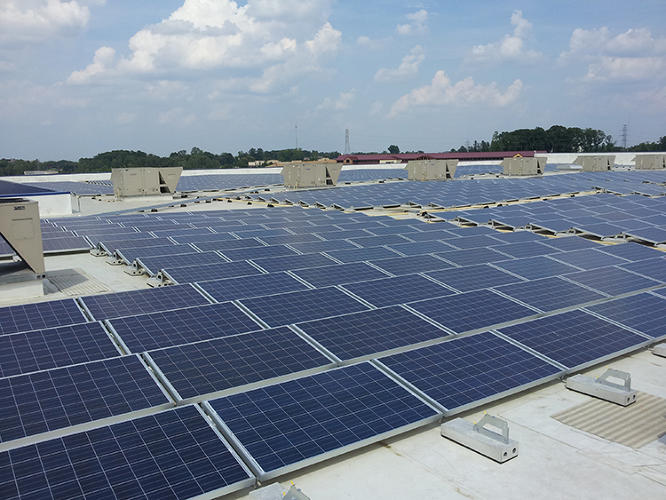
Ikea also started offering new products that can help people live more sustainably at home, like solar panels. “People come in to buy towels and leave with solar panels," Howard says. "That’s not aggressive upselling, that’s a fantastic deal where those people will get a 13% or 14% payback on the solar panels they’ve installed.”