Epson's Wearable Tech Will Track Your Pulse For You
Jan 07, 2014 20:29
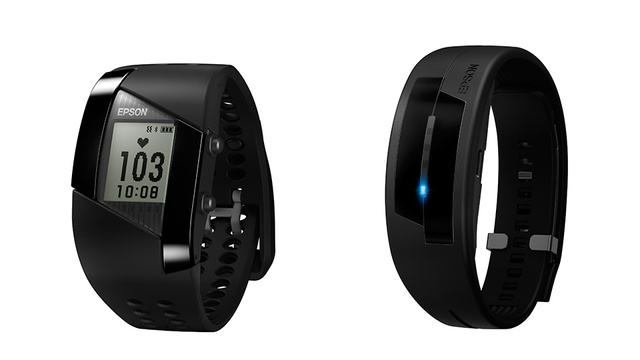
Epson is getting into the game of wearable tech. The Epson Pulsense products have built-in heart rate monitoring. You can choose from a watch or a band, and it is similar to some products we've already seen. It uses a light and a sensor to detect subtle changes in the color of your skin to track your pulse.
That same technology is used in medical oximeters and the watch contains an accelerometer as well. You'll be able to tell how many steps you've taken and how active you've been throughout the day. Another Fitbit perhaps?
But the interesting part is that the Pulsense PS-100 Band lacks a screen. It just has a small light to monitor your heart rate. It also also do cardio-zone training by using its LED indicators and uses Bluetooth 4.0 to do activity tracking. You'll be able to use it with your favorite workout app like Runkeeper or Endomondo, just like you would with a heart-rate chest-strap, provided your phone supports Bluetooth 4.0.
Both products will be available in the summer and the band will cost $130 while the watch will go for $200. Looks like something you would wear? [Epson]

Technology has altered the way people discover, evaluate, and pursue social opportunities. Many interactions that once relied on chance encounters or established social circles now begin with a search, a profile, or a message sent through a digital platform. Greater access to information has given people more control over how they connect with others, while mobile devices have made those opportunities available at almost any moment. Read more
Aviator does not behave like an old casino game moved onto a screen. It feels more like something built for the screen from the start. The plane takes off, the multiplier rises, and the player has one decision to make. Cash out now, or wait and risk the round ending before they press the button. That is the basic idea behind crash games. They strip the round down to timing. The game shows the risk in real time instead of hiding it behind a spin or a dealt card. Read more
Walk through any modern wellness expo and you’ll see a striking pattern: people aren’t just buying supplements anymore — they’re buying signals. Red light panels, PEMF mats, vagus nerve stimulators, biofeedback rings, grounding sheets. The wellness aisle has quietly become an electronics aisle. And tucked inside that shift is one of the more unusual comeback stories in alternative health: the return of Rife frequencies. Read more