























































What Are The Techniques Of Fabric Printing On Shirts?
Jul 11, 2019 20:21
Probably you have ever had the curiosity of having a unique shirt that represents you or simply helping you with your clothes to express your ideas and designs.
There are different techniques that you should know that are used to be able to transfer a design to a fabric such as:
➢ Serigraphy
➢ Airbrush
➢ Vinyl transfer by heat
➢ Sublimation
➢ DTG
➢ Embroidery
Then, we will mention the characteristic points of each of them.
Sublimation
Perhaps it is the best-known method and this is because the results are of very good quality.
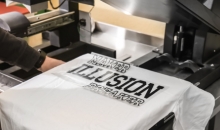
Once you have the design, you must separate it by colors to use; this is because in the technique a frame is used for each color of ink. The idea is basically to pass the ink through the mesh of the frame in the exact places. Subsequently, the ink is dried to allow it to remain on the fabric longer.
This method has the characteristic that the higher the number of shirts to be printed, the lower the cost of each shirt. This behavior is basically due to the cost of the racks because it does not matter if we make 1 or 100 pieces, the price of them is the same.
Airbrush
This technique was very popular around the 80's and 90's due to the graffiti's ability to work it based on their experience. The technique consists basically of using an airbrush and drawing on the fabric the design by hand.
Unfortunately, in this case, the ink is not very durable in the clothes and the quality of the print is determined by the skill of the artist.
Vinyl transfer by heat
In this technique, the idea is to use heat to melt the glue that is in design and thus achieve fix it to the fabric. It has the benefit that it is cheap for small quantities; however, unlike screen printing, it does not reduce its cost on a large scale.
Another drawback is that over time, the material on which the design is starting to fracture and create cracks, something that is not very pleasing to the eye and touch.
Sublimation
Heat is also used in this technique; however, the difference in the feel of the print finish is very different from the previous method.
Something important in this process is that the fabric must contain some Polyester component; it is recommended that it be at least 70% polyester and 30% cotton and that it be light in color, since otherwise, the print may be erased.
Like the transfer, templates are used that, with the help of heat, will leave the mirror-like design impregnated in the fabric printing with which they have contact.
DTG
Direct To Garment printing basically consists of leaning on a special printer to leave the ink directly on the fabric. It could be said that it is like inkjet print but on cotton. This method works very well for small quantities and the quality is even better than that of screen printing, however, the cost is higher. There are many high-quality DTG printers that you could look into and one of the more popular ones is the Epson F2100.
Embroidery
This method is expensive and not so popular, but it helps a lot to preserve the details and is durable. It has a disadvantage that it can be annoying to wear embroidered garments that are in direct contact with the skin since residues of the process remain in the back.
Now that you know a little more about the subject, we invite you to evaluate and find the best method for the idea you have in mind. Remember that the more variables you can take into account, the better the results will be in your projects.