























































Upworthy's Headlines are Annoying, But this is Why You Clicked On It
Apr 24, 2014 23:17
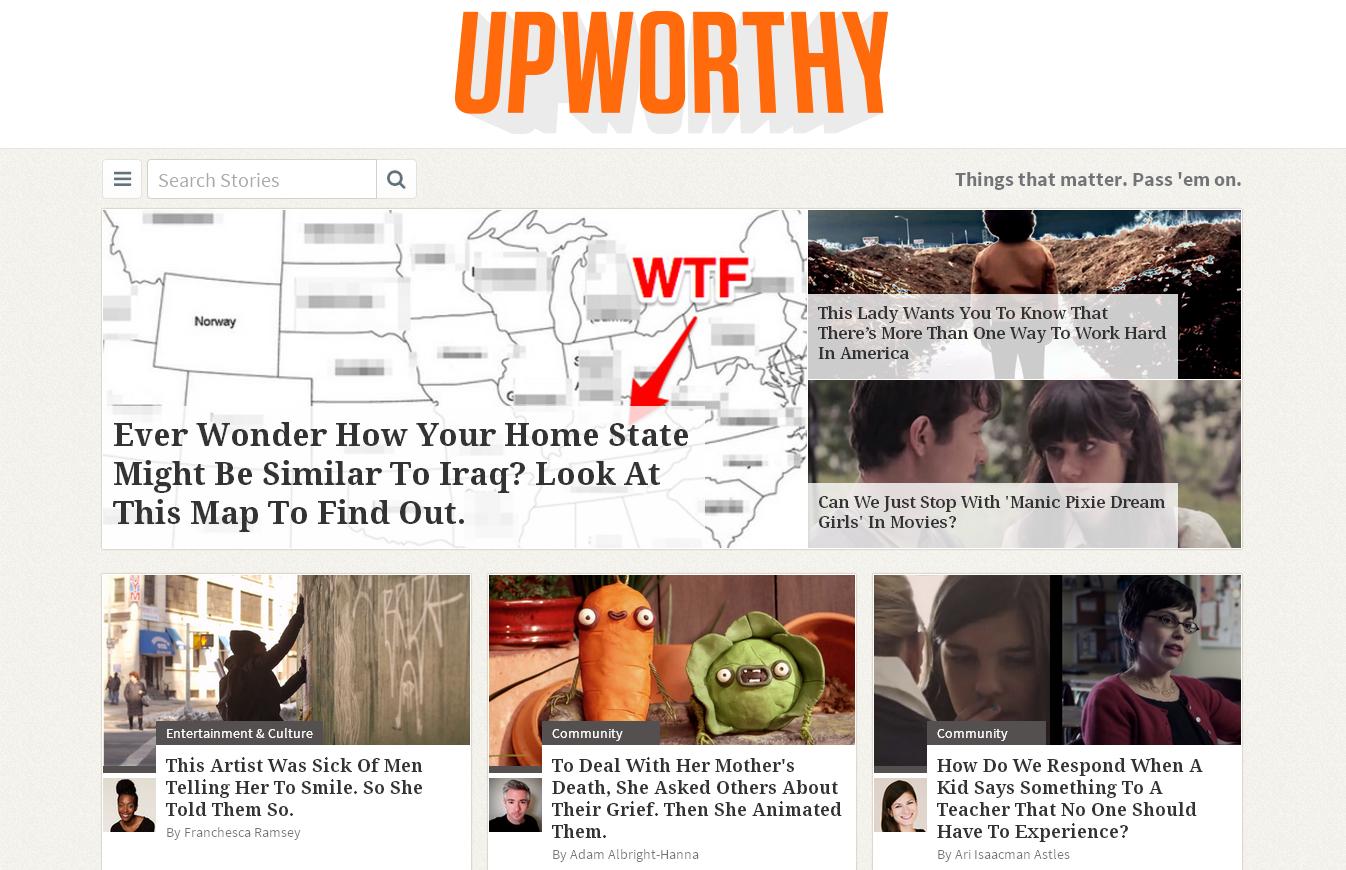
You've probably clicked on a few Upworthy links that were shared amongst your Facebook friends, and you may or may not have been impressed with its content. The news site has earned a reputation for engineering "curiosity gap" headlines; story titles that make you click on it using a perfect balance of information and intrigue.
In fact, curiosity-gap headlines can be two or three sentences long. Some look like story leads in and of themselves. For example, a Fall 2013 list of the site's greatest hits: "This Amazing Kid Just Died. What He Left Behind Is Wondtacular."
The media has criticized the approach for being manipulative and repetitive, yet those annoyingly enticing headlines are wildly effective. A recent web traffic chart reveals that Upworthy generated about 75,000 Facebook likes for each article. The second-best performing site generated fewer than 10,000 likes.
So what is the psychological reasoning behind our temptation to click on those links?
One major reason the feeling is difficult to understand is because it runs counter to classical ideas about rational decision-making. We're invested in the belief that people choose to do something to fulfill a goal. Scientists are stumped because there isn't a clear extrinsic benefit or tangible utility to learning what the amazing kid who died left behind. But you clicked anyway.
But psychologists have some theories, one of which was presented by George Loewenstein of Carnegie Mellon in the mid-90s, known as the "information-gap" theory. He believes that curiosity proceeds in two basic steps. First, a situation reveals a painful gap in our knowledge (the headline), and then we feel the urge to fill the gap to ease that pain (when you click).
"Such information gaps produce the feeling of deprivation labeled curiosity," wrote Loewenstein in Psychological Bulletin. "The curious individual is motivated to obtain the missing information to reduce or eliminate the feeling of deprivation."