






























This Idol Drops Jaws With Her Seductive Outfit

This Idol Drops Jaws With Her Seductive Outfit Jul 03, 2016

GFRIEND's Eunha Sports New Hairstyle For Comeback!

GFRIEND's Eunha Sports New Hairstyle For Comeback! Jul 03, 2016

FIESTAR's Adorable Duo Hyemi & Jei!

FIESTAR's Adorable Duo Hyemi & Jei! Jul 03, 2016

GFRIEND Dance In The Rain!

GFRIEND Dance In The Rain! Jul 03, 2016

APink Bomi Seduces In New Performance Pics

APink Bomi Seduces In New Performance Pics Jul 03, 2016

Melody Day Yoonim And Ye In Update Fans A Sweet Selca!


Roy Kim 'Cloudy Day' (天黑黑) MV!

Roy Kim 'Cloudy Day' (天黑黑) MV! Jul 03, 2016

APink Naeun Updates Fans With A Beautiful Selca!

APink Naeun Updates Fans With A Beautiful Selca! Jul 03, 2016

Taeyeon 'WHY' Goodbye Stage!

Taeyeon 'WHY' Goodbye Stage! Jul 03, 2016

Netizens Claim That She's The Prettiest Girl Group Leader


AOA Pose For A Lovely Group Photo

AOA Pose For A Lovely Group Photo Jul 03, 2016

Kang So Ra Updates Fans With A Series Of Recent Selcas


SBS Inkigayo MC Special Stage! Seoung yeon X Jeong yeon X Minseok X TWICE


Taeyeon Does 'Shy Shy Shy'

Taeyeon Does 'Shy Shy Shy' Jul 03, 2016

APink Transform Into School Girls For Japanese Comeback!

[INTERVIEW] In commemoration of the release of #B1A4's Japanese debut single, 'Beautiful Target'! A special interview! for Tower Records!
2012.06.26

The rookie boys group that became a topic, colouring the K-POP scene of 2011 vividly, B1A4, is debuting in Japan at last!
Last spring, boys group B1A4 debuted in Korea with their catchy and colourful pop music that became a hot topic! Their unique name comes from how they have one member of blood type B, and four members of blood type A. It also has the meaning of ‘Be the one, All for one’, where the members would do their best in order to realise their dreams. In terms of their music, performance and fashion, they who showed a different type of personality as compared to other groups, won the ‘Rookie Of The Year’ award during Tower Records’ ‘K-POP LOVERS! AWARDS 2011’, and are a five member group that have gotten both number 1 in terms of sales and fan voting.
That B1A4 will be having their Japanese debut on the 27th of June with their single ‘Beautiful Target’. First off, in spite of their earnestness before their Japanese debut, with a state of both surprise and happiness, B1A4 told us about topics that Tower Records’ users are paying high attention to.
Jinyoung: We’ve received a lot of support from everyone in Japan, thank you very much. From now on, us members will work hard, and show everyone a cooler figure!Baro: With a great amount of support from our fans comes great responsibility on our part. We will work hard in order to live up to everyone’s feelings!Sandeul: Before, when we came to Japan, it wasn’t like that, but recently it seems that our Japanese fans have been noticing us, and I think it’s a wonder.Gongchan: Even though our official Japanese debut isn’t until later, we’ve gotten a lot of support from Japan, and I feel the same as Sandeul about how it’s all a wonder to me. I’m really happy. From now on, we’d work hard in order to meet everyone’s expectations.Baro: When you talk about it, during our ‘BANA JAPAN FORMED FORMULA’ in April, there were fans who wore exactly the same clothes as we did. Also, a five year old boy gave us a letter as a fan. To have a fan of such a young age is just…Jinyoung: Come to think of it, we were pleasantly surprised to see men in suits amongst the audience.
THE RECORDING IN WHICH THEY REALISED THE DIFFERENCE BETWEEN THE ORIGINAL VERSION AND THE JAPANESE VERSION
Even while doing promotions in Korea, their attitude towards music is really stoical, and they move the hearts of many people regardless of generation and gender in Japan. B1A4 participates actively in the composition, production, and writing of lyrics for their songs, and they continue to pursue a ‘B1A4 identity’ that other groups do not possess. This spring, the lead song ‘Baby I’m Sorry’ from their album ‘Ignition’ released in Korea was produced by Jinyoung. While making use of the members’ personality, and a song that is easy to get into, charming you with its dramatic development, B1A4 shows their improvement in terms of song writing. Such of course is Jinyoung, and with the five members who are devoted to their strong passion towards music, their singing ability, performance, up to their expressions they have on stage, they have extraordinary faith in being artistes that embody the world view that is ‘B1A4’. For that reason alone, ‘Beautiful Target’, which is the Japanese debut song for B1A4, the Japanese version of ‘Chu Chu Chu’ and ‘Bling Girl’ that are the coupling songs, all the more brings out the strong feelings of the members.
Sandeul: There’s a slight difference in the lyrics between the original Korean and Japanese version of the song. That’s why we worked hard so as to be able to get the meaning of the Japanese version across properly.Baro: For ‘Chu Chu Chu’, the title of the song’s ‘Chu’ comes from a saying in Korea, ‘Woochuchu’, that a boy says to a girl when he is trying to cheer her up. However, the meaning of ‘Chu’ in Japanese is different [t/n: it means a kiss in japanese] and we were worried about expressing the nuance of the word well. I was in charge of rap making for the song, and because of that, it was a tough job for me to make sure that the rhyme fits and Japanese people would understand the meaning of the rap when they hear it. However, it was worth the trouble, and because the part was matched correctly, we’d like you to listen to it.Jinyoung: As for Bling Girl, it was difficult trying to match the lyrics and the syllables.Baro: ’Bling Girl’ is a song that Jinyoung hyung composed, and while keeping the atmosphere of the original version alive, there were a lot of ad libs by the members, and it became a really enjoyable recording.
With that, it seems that B1A4 had some difficulties when it came to recording in Japanese…
Jinyoung: In my part, there’s a line that goes ‘~ no you na’, and at first I had difficulties trying to match the syllables to the music. However, it was a new experience for me, and that was enjoyable. In Japanese, even if only one character is different, the meaning changes entirely. For example, ‘kiite kudasai’ (please listen) and ‘kite kudasai’ (please come), without the ‘i’, the meaning changes entirely. The first time I learnt of this difference was during this round’s recording. I sang, paying attention to this point.
There is worth in the trouble that the members went through, and of course, the Japanese versions of ‘Beautiful Target’, ‘Chu Chu Chu’, and ‘Bling Girl’ that were reborn anew, and including the Japanese original song ‘Ready to go’ that is only included in the Regular Edition of the single, the numbers in which you can meet B1A4’s charms are complete. Finally, this question was posed to the members - ‘If you produced your Japan original piece of music newly, what kind of musical piece would you want to release?’
CNU: I’d like to do a song that is firmly filled with B1A4’s colours. In Korea, the song ‘Baby I’m Sorry’ that we released in March was like that, but in terms of the group, of course, it’s a song that showcases each member’s (special) colours. That’s why I think that we’d like to do a song like that, and give a shining performance.Baro: It’s a given fact that it’d be a song with B1A4’s colours in it, but we’d like to make a song that lives up to everyone’s hopes. We’d like to have a stage that we would be able to enjoy with all our Japanese fans, and we’d like to release such a song.Jinyoung: If I create a song, adding on to what CNU and Baro said, because I think that I have to make a song that Japan will think is good, I’m researching the types of music that Japanese people like. I listen to J-Pop often, and when new songs are released, I will check it out whenever it is possible for me to. I’ve got the impression that many Japanese songs have lyrics that express the theme of ‘hope’. Because I like songs in that vein, if I were to write lyrics, I think I’d add in ‘hope’.
B1A4 talk about the image that they have towards J-Pop, that is, ‘hope’. The world of music that B1A4 creates is overflowing with ‘hope towards the future’, and there may be many fans who feel that when they listen to it, it gives the listener spirit and courage. Korea and Japan, who take in the good parts of one another’s music scene, as they build up on their generous effort, B1A4, who goes in the pursuit of their group ‘identity’, is a group that we must keep our eye on in the future.
jp-eng trans cr: tables @ AVIATEB1A4
source: tower records

If you decide you want to install a pergola in your backyard, that can add to your home’s property value. This assumes the eventual homebuyers who are looking at the property when you decide to move on from it like that kind of thing. Many do, so you can often make back the money you spend on your pergola. Read more
Daily K Pop News | Latest K-Pop News
Jun 14, 2025 17:12
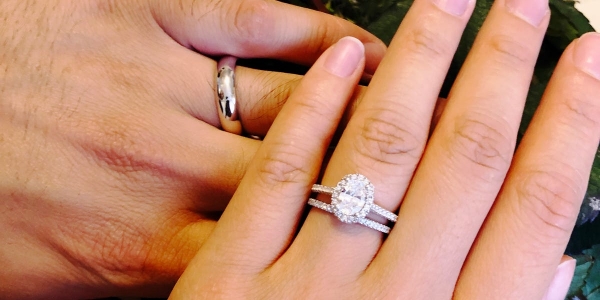
Choosing the right location for your wedding is one of the most personal — and sometimes most difficult — parts of the planning process. There are so many factors to think about: scenery, accessibility, space, accommodation, and that all-important “feel” you get when you picture yourself walking down the aisle. For many couples, the English countryside strikes the perfect balance between romance and practicality — and one county that’s often at the top of the list is Warwickshire. Read more
Daily K Pop News | Latest K-Pop News
wedding
Jun 10, 2025 23:13
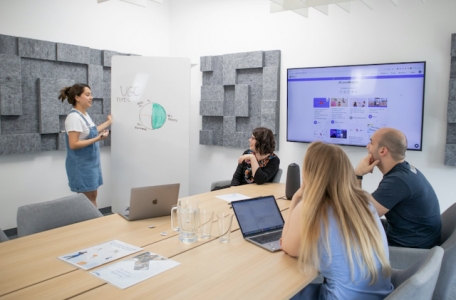
Corporate events are no longer confined to ballrooms and conference centers. The integration of virtual elements with in-person gatherings has created a new event format that extends reach while maintaining the human connection that makes live experiences valuable. Read more
Daily K Pop News | Latest K-Pop News
events
Jun 10, 2025 23:13
Copyright © Fooyoh.com. All rights reserved. User Agreement | Privacy Policy | Contact us
| Advertising
| About us
| Careers