




















































Your Brain Is Designed To Have Two Internal Clocks
Dec 02, 2013 20:14
Without your brain’s impressively accurate internal clock, simple tasks like taking a shower or driving could continue indefinitely. This clock helps keep track of elapsed time, resulting in that nagging feeling that reminds us if we drive too long, we might easily miss our exit.
But how does the brain generate this finely tuned mental clock? Until recently, most neuroscientists believed that we have distinct neural systems for processing different types of time. The latest research indicates that the model of a single neural clock might be too simplistic.
The study from the University of California reveals that the brain may in fact have a second method for sensing elapsed time. This second internal clock not only works in parallel with our primary neural clock, but may even compete with it.
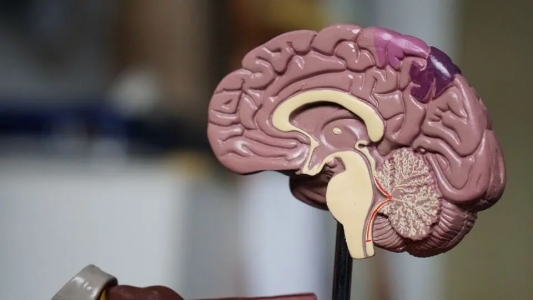
Based on the research, it would seem that the hippocampus has a very particular role in signaling elapsed time. It can specifically discriminate between similar time periods at long time scales. When it comes to sensing the difference between shorter time scales other brain regions will take over as internal time-keeper.
You can read more about this fascinating study over at the Scientific American
But how does the brain generate this finely tuned mental clock? Until recently, most neuroscientists believed that we have distinct neural systems for processing different types of time. The latest research indicates that the model of a single neural clock might be too simplistic.
The study from the University of California reveals that the brain may in fact have a second method for sensing elapsed time. This second internal clock not only works in parallel with our primary neural clock, but may even compete with it.
Based on the research, it would seem that the hippocampus has a very particular role in signaling elapsed time. It can specifically discriminate between similar time periods at long time scales. When it comes to sensing the difference between shorter time scales other brain regions will take over as internal time-keeper.
You can read more about this fascinating study over at the Scientific American