
























































Scientists Have More Dangerous Jobs Than You
Aug 20, 2013 02:48
Scientists are those intelligent people who dish out things you're delighted to learn about every other day, but we don't really think of the risks they take when they're putting theories and ideas into a series of experiments and lengthy research.
But in the name of discovery, many of these scientists take on extreme jobs to contribute to the information so easily available to us today. Here are just some of the most extreme scientist jobs around:
1. Saturation Diver
"You can only spend so long at a certain depth, because your body absorbs nitrogen, which is an inert gas," said M. Dale Stokes, an oceanographer at the University of California, San Diego, Scripps Institution of Oceanography in La Jolla, Calif.
When divers stay submerged for too long or surface too quickly, the dissolved nitrogen forms bubbles that expand, causing a person's blood to froth - a phenomenon known as "the bends". To avoid this, scientists can live at the seafloor, in an underwater lab called Aquarius off the coast of Florida. The Aquarius trailer is pumped with air from above the ocean and kept as dry as possible. So it's like "you're living down there in a bubble of air on the seafloor," Stokes said.
Divers can live there for about two weeks, from where they venture out with scuba suits and oxygen tanks to spend hours exploring nearby reefs. "It's not romantic. You easily pick up skin infections and ear infections. Your body is damp and never really dries out," Stokes said.
2. Cave Diver
Between 1969 and 2007, 368 Americans died while cave diving. The risk involves scuba divers probing hidden, underwater caves filled with terrifying odds. A few wrong kicks can release large amounts of sediment, creating a complete blackout that leaves the divers hopelessly lost in the depths, with depleting oxygen supply. But these caves can also reveal new insights about ancient Earth's climate and the ecology of the islands.
3. Astronaut
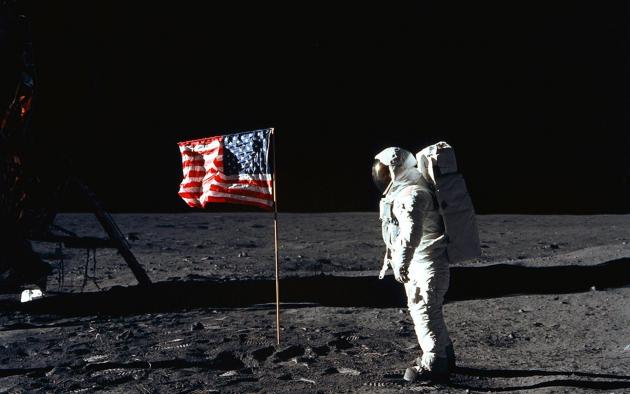
From arduous training to the mass UV rays, to a 1 in 100 risk of dying in-flight, astronauts risk one of the harshest environments. And even when they arrive back on earth, they could face muscle atrophy and weakening of bones due to being in low gravity for so long.
4. Crocodile Physiologist
These guys deal with some heavy-weights of the animal kingdom. "It's not for the fainthearted," Roger Seymour, a plant and animal physiologist at the University of Adelaide in Australia, told LiveScience. When they're done, they usually point the crocodiles toward the water, but every once in awhile, a crocodile decides to look for a meal on land. One time, a crocodile turned right around and headed toward camp, Seymour said.
"One of my colleagues pushed me down into the mud in his effort to get down into the Landcruiser," Seymour said, referring to his SUV.
5. Venom Milker
Scientists who have to milk venom handle some of the world's deadliest snakes, lizards and even sharks. Milking a venomous snake isn't easy - you'd have to find many snakes to get a decent amount of venom. Most of these scientists have been bitten, sometimes more than two dozen times.
6. Storm Chaser
When you hear a storm coming, you'd run and seek shelter. But not these guys. They run toward it in order to place wind and pressure sensors as close to the storms as possible, at least according to storm chaser Tony Laubach, a meteorologist in DeSoto, Illinois. However, it's lightning that scares Laubach, as it's much more dangerous. Its strikes are deadly, and random.
7. Lab Technician
It may sound boring but it's one of the most dangerous jobs in science. Simple accidents can happen - take into mind getting electrocuted, witnessing an explosion closeup, getting injured by flammables or toxic chemicals, and so much more. Worse yet when an accident hurts not just the technician, but the people and things nearby.
How are you liking your job now? Your Excel sheets seem physically safer all of a sudden doesn't it?