
























































OMG, TED Talks Are Total Bullshit. Or Not?
Jan 11, 2014 01:32
TED Talks might be known as a platform for individuals to provide important commentaries on a widespread range of issues and ideas, not everyone feels the same way.
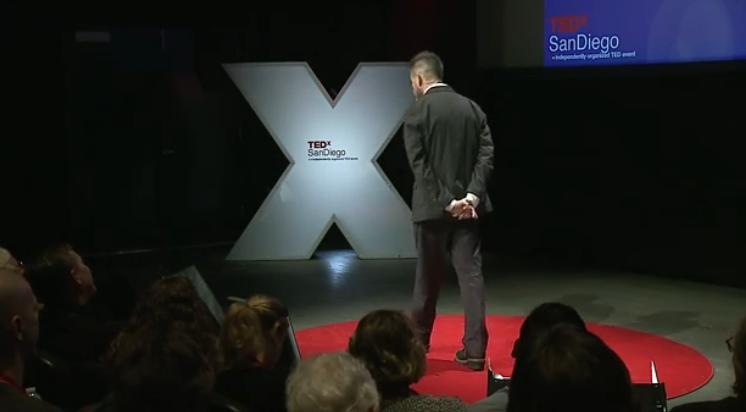
In this clip, Benjamin Bratton who works as the Associate Professor of Visual Arts at UCSD, used his chance at a TEDx event as an outlet to describe TED Talks as “placebo politics” and “middlebrow megachurch infotainment.”
Bratton delivered a talk called "What's Wrong with TED Talks?"
"The first reason is over-simplification," Bratton says at the start of his speech. "To be clear, I have nothing against the idea of interesting people who do smart things explaining their work doing in a way that everyone can understand, but TED goes way beyond that."
Bratton then explains what he means:
I was recently at a presentation that a friend, an astrophysicist, was making to a potential donor, and I thought this talk was lucid, and engaging, and I'm a professor of visual arts here at UC San Diego so at the end of the day, I know really nothing about astrophysics. The donor, however, said, 'you know what, I'm gonna pass. I'm just not inspired. You should be more like Malcolm Gladwell.'
Bratton was livid: "Can you imagine? A scientist who creates real knowledge should be more like a journalist who recycles fake insights. This is not popularization. This is taking something with substance and value and coring it out so that it can be swallowed without chewing. This is not how we'll confront one of our most frightening problems — this is one of our most frightening problems."
Here's the take away from Bratton if you don't have time to watch the whole video. Bratton was livid: "Can you imagine? A scientist who creates real knowledge should be more like a journalist who recycles fake insights. This is not popularization. This is taking something with substance and value and coring it out so that it can be swallowed without chewing. This is not how we'll confront one of our most frightening problems — this is one of our most frightening problems."
'Innovation' defined as moving the pieces around and adding more processing power is not some Big Idea that will disrupt a broken status quo: that precisely is the broken status quo.
One TED speaker said recently, ;If you remove this boundary ... the only boundary left is our imagination.' Wrong.
If we really want transformation, we have to slog through the hard stuff (history, economics, philosophy, art, ambiguities, contradictions). Bracketing it off to the side to focus just on technology, or just on innovation, actually prevents transformation.
Instead of dumbing-down the future, we need to raise the level of general understanding to the level of complexity of the systems in which we are embedded and which are embedded in us. This is not about 'personal stories of inspiration,' it's about the difficult and uncertain work of demystification and reconceptualisation: the hard stuff that really changes how we think. More Copernicus, less Tony Robbins.
There are plenty of TED talks that resemble what Bratton is talking about, though he didn't address the ones that go off tangent when it comes to the spirit of TED talks. Like this one below. Is this even a "TED talk" to begin with? There is no idea or message in this one:One TED speaker said recently, ;If you remove this boundary ... the only boundary left is our imagination.' Wrong.
If we really want transformation, we have to slog through the hard stuff (history, economics, philosophy, art, ambiguities, contradictions). Bracketing it off to the side to focus just on technology, or just on innovation, actually prevents transformation.
Instead of dumbing-down the future, we need to raise the level of general understanding to the level of complexity of the systems in which we are embedded and which are embedded in us. This is not about 'personal stories of inspiration,' it's about the difficult and uncertain work of demystification and reconceptualisation: the hard stuff that really changes how we think. More Copernicus, less Tony Robbins.
Or this one by Terry Moore on "How to tie your shoes":
The list could seriously go on.