




















































Western Digital Will Fill Their New Drives with Helium
Nov 05, 2013 02:08
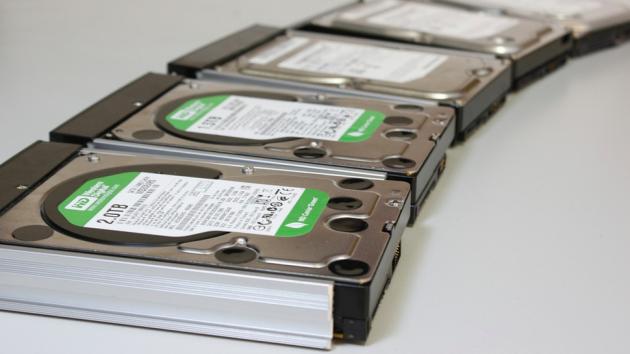
Digital storage is getting larger and cheaper and now Western Digital wants to make it even more efficient than ever. They want to fill their hard drives with helium.
The plates on which the data are stored spin at thousands of revolutions per minute and the air inside the drive limits the number that can be stacked together. WD wants to replace air with helium so it cuts the drag forces right down allowing manufacturers to squeeze more plates inside. All Things D explains what that means:
Deploying 11 petabytes of storage using current drive technology requires 12 racks and 2,880 hard drives, and about 33 kilowatts of power to run them. With the new helium-based technology, you could do it with eight racks and 1,920 individual drives, and run them on 14 kilowatts.
[All Things D Image by lkaestner under Creative Commons license]


A stable wireless connection supports multiple aspects of daily activities. However, the signal strength may get reduced in distant bedrooms, upper floors or balcony spaces. This happens because the intensity of radio waves reduces as they travel through walls, ceilings and furniture. Most of the standard Wi-Fi routers' coverage stays around 140 to 230 square meters. By using the correct steps, you can extend the Wi-Fi network range across your home and office. Read more
It is probably safe to say that the vast majority of us appreciate being able to safely go about our business. We are not looking to cause trouble or have it find us. With that in mind, most of us at least make a minimal effort to secure our homes. But cost can be a factor in determining just how far we go with home security. Read more
The Rewarded Social Outlook for 2026, Anonymous chat is experiencing a transition from a random and unmonitored chat system to a "Rewarded Socializing" system with the initiative led by the C24Club "Chat-to-Earn" platform. Rewarded platforms can improve the average length of chat sessions by 30% and cut toxicity and improve safety cases by 60%. Read more