




















































USB Ports May Be The Future of Power Outlets
Oct 24, 2013 19:39
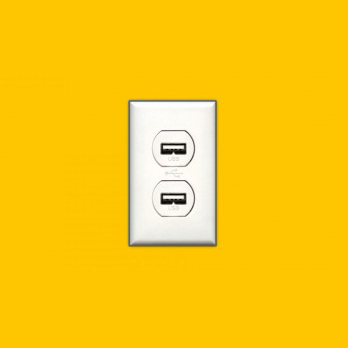
Could the future of power outlets be replaced by the now, very extremely ubiquitous USB? Just about everyone has one.
The cable can carry both power and data, and is universal. Some are considering USB to the future of electricity. A new Economist report is driving that point home.
The latest issue The Economist takes a close look at the future of USB, suggesting that it could replace conventional power outlets. There are already a host of devices that are USB-powered, but these devices are much smaller. However, a new standard is going to be introduced next year, which states that USB will be able to power much bigger devices soon enough.
But the excitement is not just in the electrical conducting abilities, but for the entire network of USB devices. For one thing, a USB-based DC network could be more environmentally friendly than AC. From The Economist:
A low-voltage DC network works well with solar panels. These produce DC power at variable times and in variable amounts. They are increasingly cheap, and can fit in windows or on roofs. Though solar power is tricky to feed into the AC mains grid, it is ideally suited to a low-voltage local DC network.
By connecting these DC networks to each other, it could produce a whole new kind of power grid. The Economist again:It works even better if the network has a biggish central battery hooked up to the mains grid, which can charge itself up at night when power is cheap. But the real prize comes when several buildings combine such DC networks. Pooling supply, demand and storage gives you the makings of a “smart grid”—an electricity supply system which is more resilient and thrifty than the existing set-up.
USB PD (Power Delivery) systems will be introduced next year, and it increases the standard's power level to 100 watts and enables electricity to flow in both directions. The system is also tailored to optimize power usage and give each device exactly just the amount of electricity it needs. In fact, USB ports are already becoming a standard in homes. You can even install them yourself. Give the article a read over at The Economist:
[Economist]