






















































A Cancer Fighting Tech Is Being Used To Make Micro Rocket Engines
Sep 04, 2013 19:14
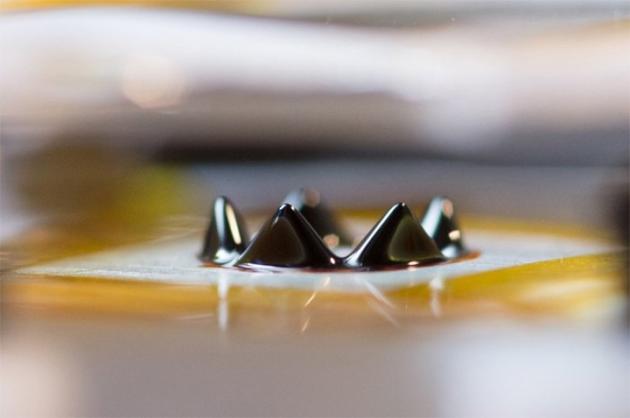
Earth's orbit is filled with dozens of mobile phone sized nanosatellites. They are used for a wide range of stuff from student research to top secret projects by the government. The problem is, getting them into the correct position in space is difficult.
They're carried into orbit by larger rockets, but they don't always end up where they're supposed to be. The scientists over at Michigan Tech have discovered a tech used for cancer treatment that could provide a solution for this.
The team at Michigan Tech have been researching a liquid called ferrofluid. They have magnetic nanoparticles that move when presented with magnetic force. Because this is natural, they are inexpensive to work with. A research team at the University of Sydney had already been using ferrofluids to treat liver cancer. The two teams worked together and discovered that it could be used as a solution for the micro rocket problem.
Michigan tech found that sharp tips in the liquid needed for thrust would regenerate if damaged, and when they turned up the voltage too high, the tips of the ferrofluids exploded. After the explosion, the fluid re-organized itself and began to form tips.
The scientists at Michigan Tech are confident that this technology will enable them to build a better micro rocket engine, so maybe the next time you launch a tiny satellite up, you'll be using this.
Via Michigan Tech