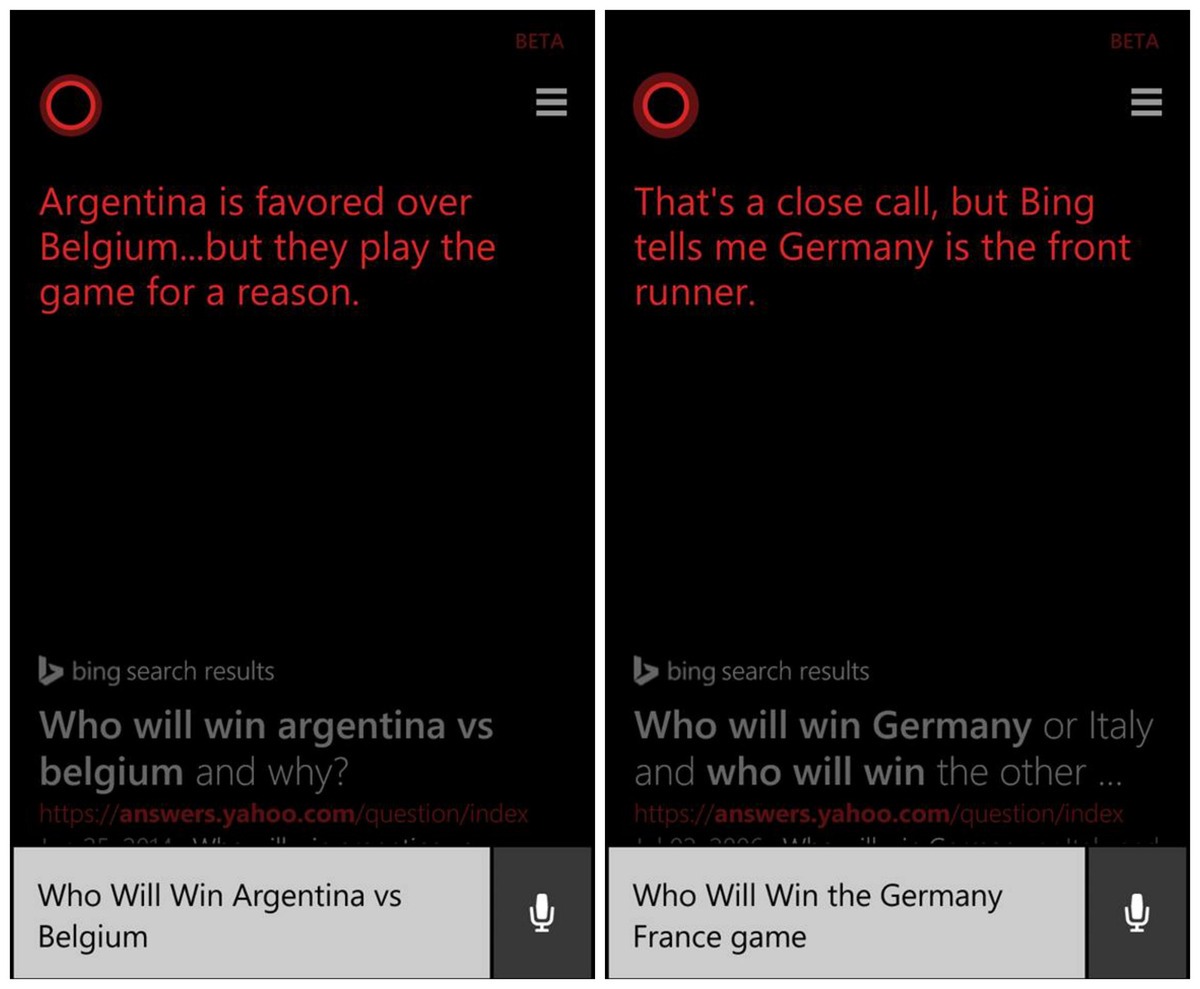
Microsoft's digital assistant - Cortana - has successfully predicted the outcome of every match of this World Cup elimination round. Is she the new Paul the Octopus?
The psychic sea creature who died in 2010, became a worldwide sensation when it predicted the winning team in eight of the 2010 tournament's matches. Cortana on the other hand, has correctly called the final results of all eight matches played in the tournament's elimination round.
Cortana relies on Microsoft's Bing search engine to power its predictions. They explain how it comes up with its World Cup predictions in their blog post last month:
For the tournament, our models evaluate the strength of each team through a variety of factors such as previous win/loss/tie record in qualification matches and other international competitions and margin of victory in these contests, adjusted for location since home field advantage is a known bias. Further adjustments are made related to other factors which give one team advantages over another, such as home field (for Brazil) or proximity (South American teams), playing surface (hybrid grass), game-time weather conditions, and other such factors. In addition, data obtained from prediction markets allows us to tune the win/lose/tie probabilities due to the ‘wisdom of the crowds’ phenomenon captured by the people wagering on the outcomes.
So who will win in the next four matches? Cortana predicts Brazil defeating Columbia, Germany beating France, and Argentina beating Belgium and the Netherlands beating Costa Rica.