


















































The Mystery of Who Designed the Hamburger Icon is Solved [VIDEO]
Apr 01, 2014 19:42
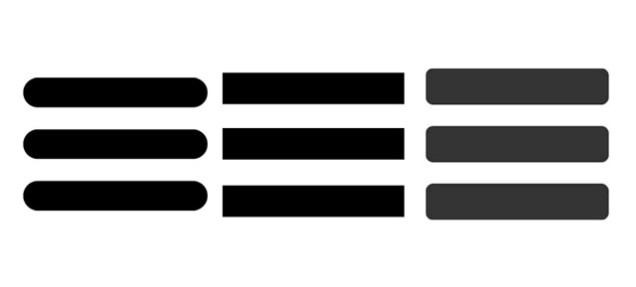
The three black bars icon above is also known as the hamburger icon. But who designed it? It's so old and ubiquitous, you'd think the mystery would be very difficult to solve, but software designer Geoff Alday set out to discover just who was the person behind this.
The burger, it turns out, comes from the Xerox "Star" personal workstation. Its designer, Norm Cox, was responsible for the entire system's interface, including the icons.
Watch the video below or skip to about 21:05 in the following video to see an explanation:
Alday reached out to Cox, who now owns his own UX and UI company, to find out more. Cox replied:
You've done your homework and found the right guy. I designed that symbol many years ago as a "container" for contextual menu choices. It would be somewhat equivalent to the context menu we use today when clicking over objects with the right mouse button.
Its graphic design was meant to be very "road sign" simple, functionally memorable, and mimic the look of the resulting displayed menu list. With so few pixels to work with, it had to be very distinct, yet simple.
I think we only had 16x16 pixels to render the image. (or possibly 13x13... can't remember exactly). Interesting inside joke... we used to tell potential users that the image was an "air vent" to keep the window cool.
It usually got a chuckle, and made the mark much more memorable. It's been nice to see that so many of our designs from those early pioneering years have stood the test of time and become ubiquitous symbols in our UI's.
Its graphic design was meant to be very "road sign" simple, functionally memorable, and mimic the look of the resulting displayed menu list. With so few pixels to work with, it had to be very distinct, yet simple.
I think we only had 16x16 pixels to render the image. (or possibly 13x13... can't remember exactly). Interesting inside joke... we used to tell potential users that the image was an "air vent" to keep the window cool.
It usually got a chuckle, and made the mark much more memorable. It's been nice to see that so many of our designs from those early pioneering years have stood the test of time and become ubiquitous symbols in our UI's.