



















































Data-Stealing Drones Are Real, And They're Targeting Smartphones
Mar 21, 2014 18:59
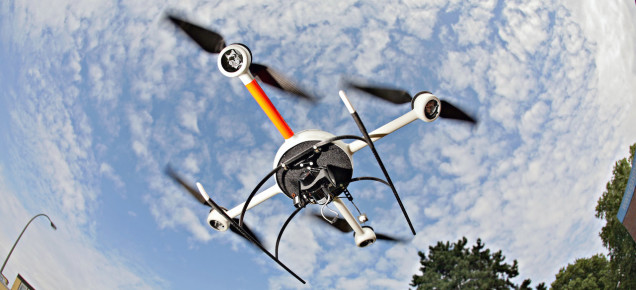
Here's more proof that "Big Brother" is always watching your every move. Security researchers from Sensepoint have built new software called Snoopy, which turns drones into data thieves.
The software uses drones that seek out the signal that your smartphone broadcasts when it's looking for a Wi-Fi network to join. Once it gets close enough (about two feet) to intercept the signal, it will trick the phone into thinking it's a trusted network. And that's when Snoopy gains access to all kinds of data stashed inside the phone.
The researchers claim they've successfully stolen Amazon, PayPal, and Yahoo credentials from random Londoners. Besides passwords, they can retrieve things like credit card numbers, location data, and usernames. Just to be safe, you might want to turn off that automatic Wi-Fi network-finding feature in your phone settings.
A stable wireless connection supports multiple aspects of daily activities. However, the signal strength may get reduced in distant bedrooms, upper floors or balcony spaces. This happens because the intensity of radio waves reduces as they travel through walls, ceilings and furniture. Most of the standard Wi-Fi routers' coverage stays around 140 to 230 square meters. By using the correct steps, you can extend the Wi-Fi network range across your home and office. Read more
It is probably safe to say that the vast majority of us appreciate being able to safely go about our business. We are not looking to cause trouble or have it find us. With that in mind, most of us at least make a minimal effort to secure our homes. But cost can be a factor in determining just how far we go with home security. Read more
The Rewarded Social Outlook for 2026, Anonymous chat is experiencing a transition from a random and unmonitored chat system to a "Rewarded Socializing" system with the initiative led by the C24Club "Chat-to-Earn" platform. Rewarded platforms can improve the average length of chat sessions by 30% and cut toxicity and improve safety cases by 60%. Read more