



















































Your Car Will Recognize The Road Rage Monster in You, And Suggest You Calm Down [VIDEO]
Mar 17, 2014 19:04
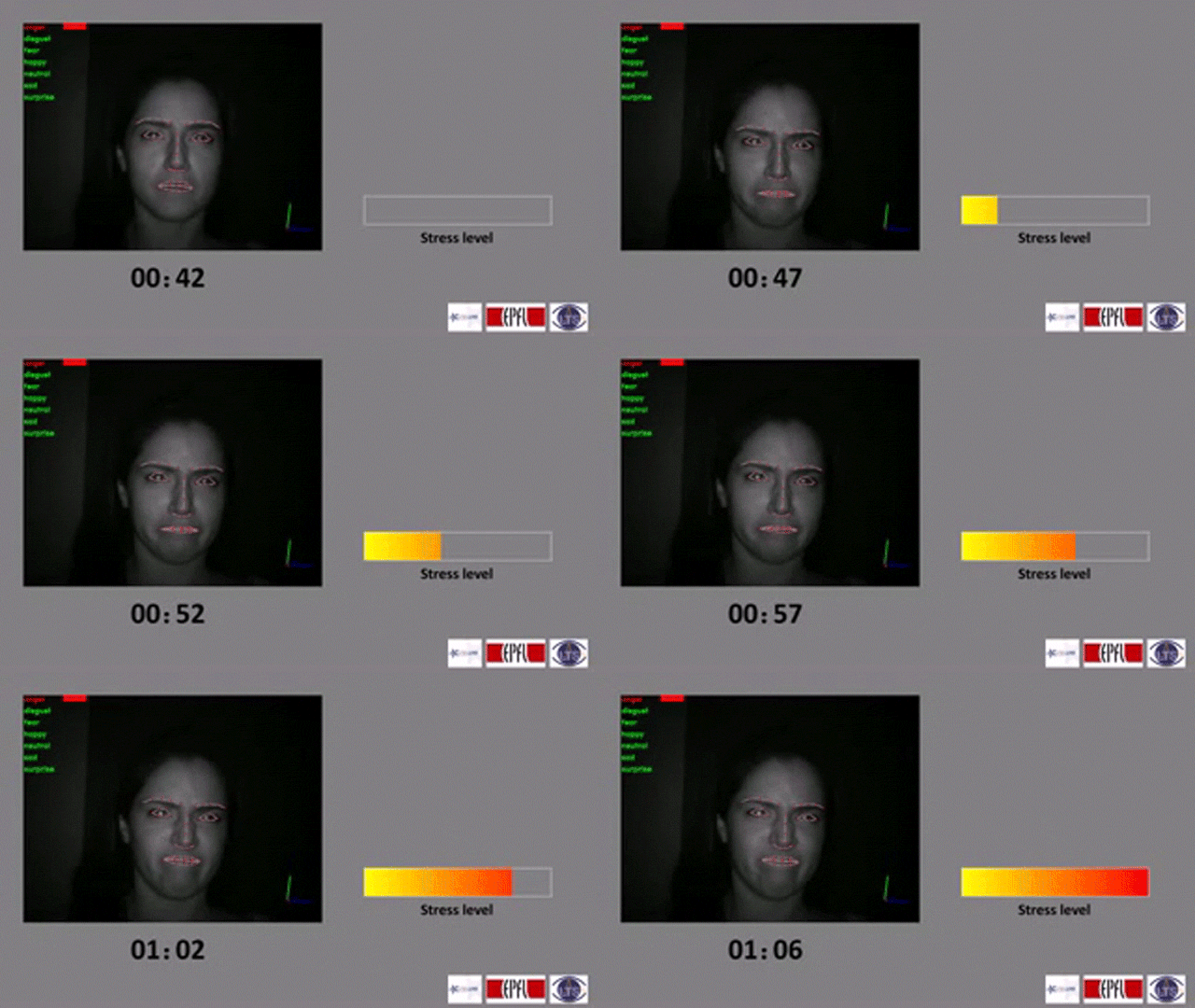
Road rage is real. And it puts everyone at risk. Researchers from École Polytechnique Fédérale de Lausanne—or EPFL for short—are working on an in-car facial recognition system to tell when a driver isn't happy. Could this work to prevent road-rage?
The researchers are working with engineers from PSA Peugeot Citroen, and they adapted an infrared camera-based facial detection system to keep an eye out on anger and disgust.
Still, it's tough to nail down just what sort of facial expressions really mean for some people. It is hard to tell if a driver is angry and not everyone uses the same facial expressions to indicate anger or disgust.
But in the majority of test situations the facial-detection system was able to accurately spot an enraged driver, and eventually it could be used to limit a vehicle's speed, or flash and sound a warning that they need to calm down.
A stable wireless connection supports multiple aspects of daily activities. However, the signal strength may get reduced in distant bedrooms, upper floors or balcony spaces. This happens because the intensity of radio waves reduces as they travel through walls, ceilings and furniture. Most of the standard Wi-Fi routers' coverage stays around 140 to 230 square meters. By using the correct steps, you can extend the Wi-Fi network range across your home and office. Read more
It is probably safe to say that the vast majority of us appreciate being able to safely go about our business. We are not looking to cause trouble or have it find us. With that in mind, most of us at least make a minimal effort to secure our homes. But cost can be a factor in determining just how far we go with home security. Read more
The Rewarded Social Outlook for 2026, Anonymous chat is experiencing a transition from a random and unmonitored chat system to a "Rewarded Socializing" system with the initiative led by the C24Club "Chat-to-Earn" platform. Rewarded platforms can improve the average length of chat sessions by 30% and cut toxicity and improve safety cases by 60%. Read more