




























The Impact of OTT Platforms on Regional Cinema Growth


The Benefits of Using Electronic Logging Devices (ELDs)


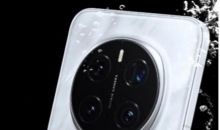
HONOR Magic 7 Pro Design and Build Quality: A Closer Look


How Does Endpoint Management Support Compliance Goals?


Choosing the Best Application Security Testing Tools for Your Business


Recent IPOs in India: What investors need to know

Recent IPOs in India: What investors need to know Nov 27, 2024

How to Manage a Distributed Remote Team

How to Manage a Distributed Remote Team Nov 23, 2024

Top Tools and Best Practices for Successful Social Media Management


How to Secure CRM Software and Ensure Data Privacy
How to Secure CRM Software and Ensure Data Privacy Sep 30, 2024

How to Select the Right Excel Consultant for Complex Business Solutions


Banxe Revolutionizes Financial Management with Innovative Payment Tools


How NLP Can Transform Your Communication Skills

How NLP Can Transform Your Communication Skills Aug 27, 2024

Essential HVAC Maintenance for Rental Properties

Essential HVAC Maintenance for Rental Properties Aug 26, 2024

Maximizing Equipment Lifespan with CMMS Software

Maximizing Equipment Lifespan with CMMS Software Aug 08, 2024

Top Business Tools for Streamlining Your Operations

Top Business Tools for Streamlining Your Operations Aug 01, 2024
This is How Online Ads Work
Feb 26, 2014 19:52
Online ads are pretty annoying, but without them, we would be out of a job. And the Internet wouldn't be able to exist. Online ads are part of an impressively complex network of technology.
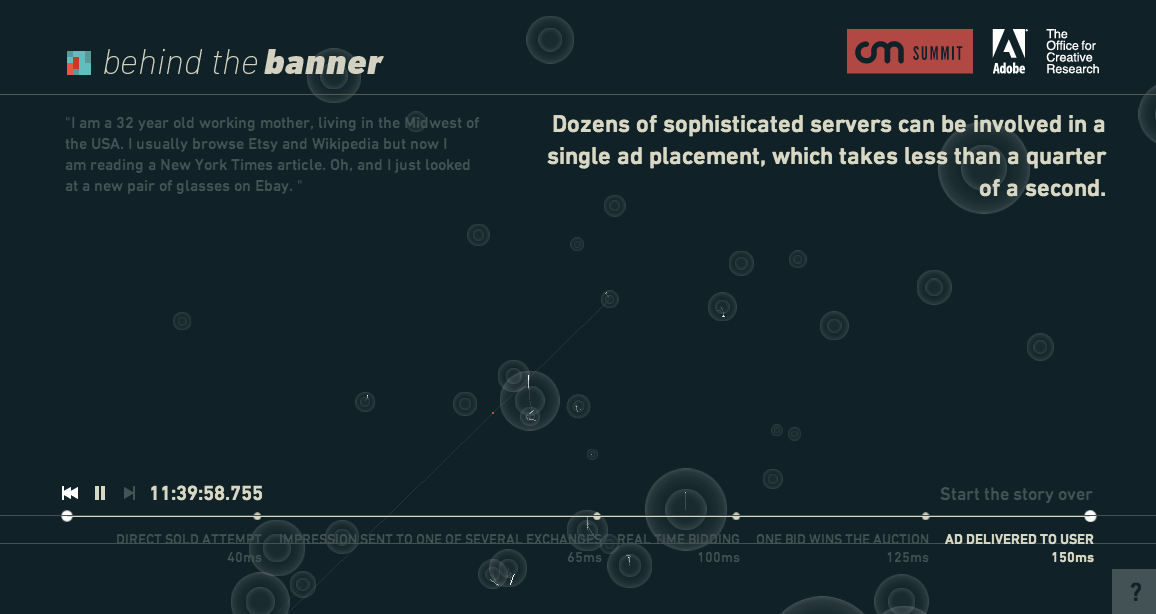
CM Summit posted an interactive feature explaining how online ads work—in real-time—in a few simple steps. The process involves bouncing your data around the world in mere milliseconds. It is very impressive.
When you visit any website, your browser arrives with a detailed data profile that reveal your age, gender and also your location and a list of sites you've recently visited. This gives the website a way to know which ads to show you.
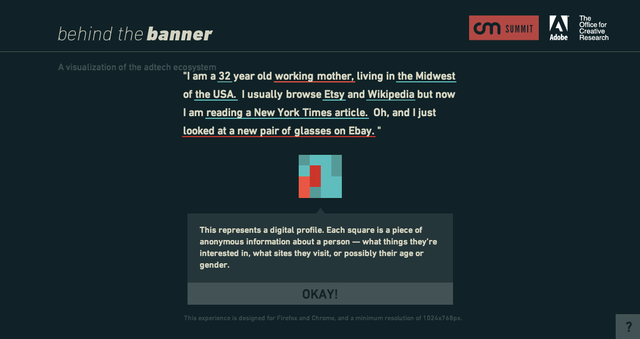
Using information like internet cookies, social media and more, an ad server can generate a unique profile of various metrics. With that code generated, the ad server will try to match it against a pre-sold inventory of ads. If the profile matches up, a relevant ad is served up in a split second.
When it doesn't fit, your request is then sent to an ad exchange that might be operated by anybody. They may have data on you which it will use to help serve you more relevant ads.
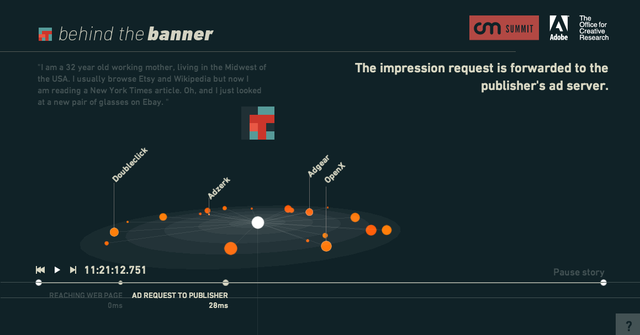
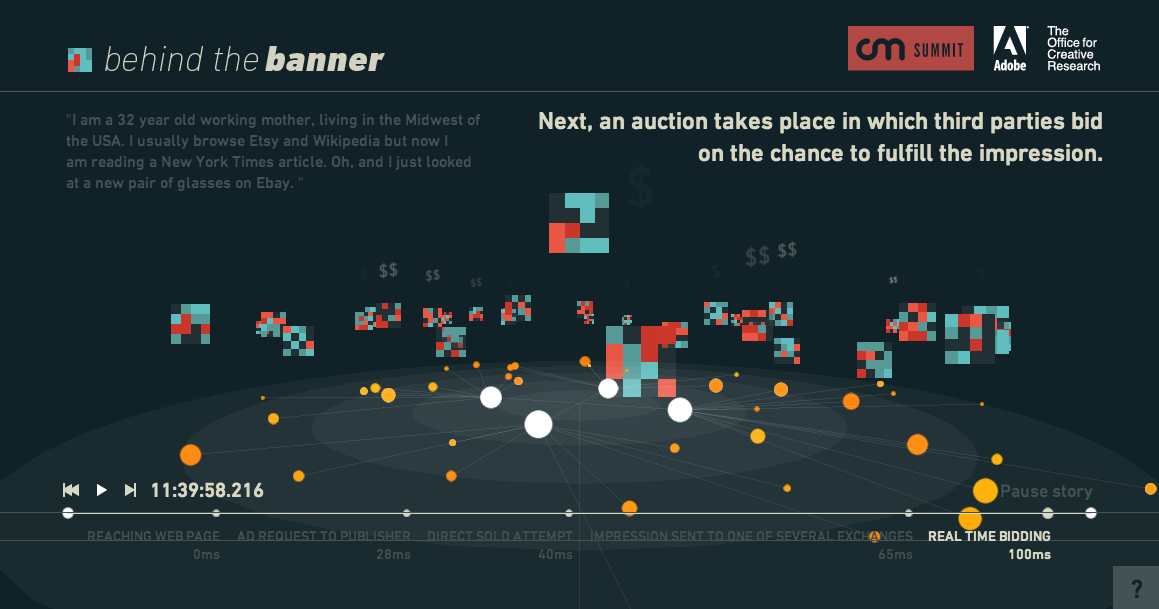
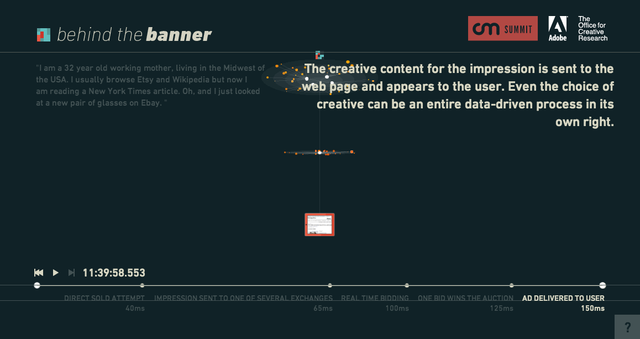
The request will first go on the auction block where different third parties will try to match their ads with your profile for the right price. In a few milliseconds, the impression is sold to the highest bidder and the ad is delivered to your browser.
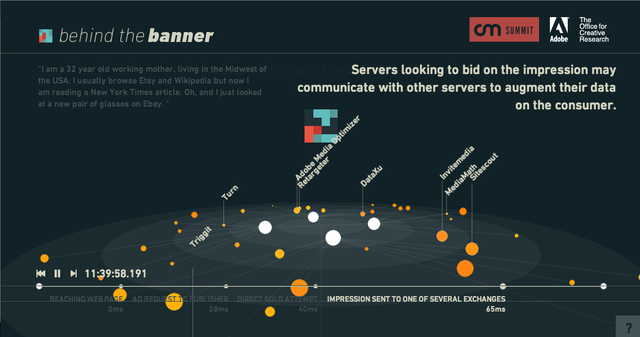
It's amazing, not only on a technological aspect where so much sophistication is involved, but the fact that online advertisers know so much about you.
[Co.Design Check out the full interactive here.]
CM Summit posted an interactive feature explaining how online ads work—in real-time—in a few simple steps. The process involves bouncing your data around the world in mere milliseconds. It is very impressive.
When you visit any website, your browser arrives with a detailed data profile that reveal your age, gender and also your location and a list of sites you've recently visited. This gives the website a way to know which ads to show you.
Using information like internet cookies, social media and more, an ad server can generate a unique profile of various metrics. With that code generated, the ad server will try to match it against a pre-sold inventory of ads. If the profile matches up, a relevant ad is served up in a split second.
When it doesn't fit, your request is then sent to an ad exchange that might be operated by anybody. They may have data on you which it will use to help serve you more relevant ads.
The request will first go on the auction block where different third parties will try to match their ads with your profile for the right price. In a few milliseconds, the impression is sold to the highest bidder and the ad is delivered to your browser.
It's amazing, not only on a technological aspect where so much sophistication is involved, but the fact that online advertisers know so much about you.
[Co.Design Check out the full interactive here.]

Let’s be honest; OTT platforms have completely changed our movie-watching experience and made entertainment just a click away. A few years ago, who would have thought that watching regional or international movies could be this easy, convenient, and tailored to our budget and preferences? And, yet here we are enjoying the options of Marathi, Malayalam, Hindi, Gujarati, Tamil movies, and a lot more at our fingertips. Read more

Electronic Logging Devices (ELDs) have revolutionized the trucking industry by streamlining logging practices and ensuring compliance with federal regulations. Designed to monitor a vehicle’s engine and automatically record driving hours, ELDs replace traditional paper logs and provide an efficient solution for tracking Hours of Service (HOS). If you're looking to complement your fleet's technology, partnering with tools like a reliable truck dispatch service can further optimize operations and keep your business running smoothly. Read more

The HONOR Magic 7 Pro price in ksa makes it an appealing option for those looking for a high-end smartphone. This advanced device stands out with its sleek design and robust build quality. This blog delves into the details, examining what makes the HONOR Magic 7 Pro unique, from the materials used to its overall durability and user experience. If you’re considering purchasing a high-end smartphone that balances aesthetics and functionality, this review of the HONOR Magic 7 Pro’s design and build quality will provide you with all the information you need. Read more
TECH NEWS
Jan 11, 2025 14:55
Copyright © Fooyoh.com. All rights reserved. User Agreement | Privacy Policy | Contact us
| Advertising
| About us
| Careers